Update, 2 November 2026: the Government has approved the new rules, but the full text has not yet been published in the Diário da República, and no publication or start date has been announced. Before your visit, check the rules that apply with ICNF. We will update this article when the text is published.
Portugal’s Government has approved a new rulebook for Peneda-Gerês National Park, the Programa Especial do Parque Nacional da Peneda-Gerês, designed to protect nature while keeping the park’s villages alive. It updates the park’s boundaries, makes it easier to maintain paths, buildings and fire-prevention infrastructure, supports traditional farming and grazing, and bans motorhome service areas outside campsites. For visitors, the message is that the park is a place where people live and work, and that rules will be clearer.
At a glance
- What: new Special Programme for Peneda-Gerês National Park (Programa Especial do PNPG)
- Approved by: the Portuguese Government, announced 2 November 2026
- Main changes: updated park boundaries; simpler rules to maintain paths, utilities and existing buildings; easier fire-prevention infrastructure; continued farming, grazing and forestry; support for nature tourism
- Motorhomes: motorhome service areas outside campsites and caravan parks are banned; organised alternatives are planned with municipalities
- In force from: not yet announced
- Last checked: 2 November 2026
A national park where people live
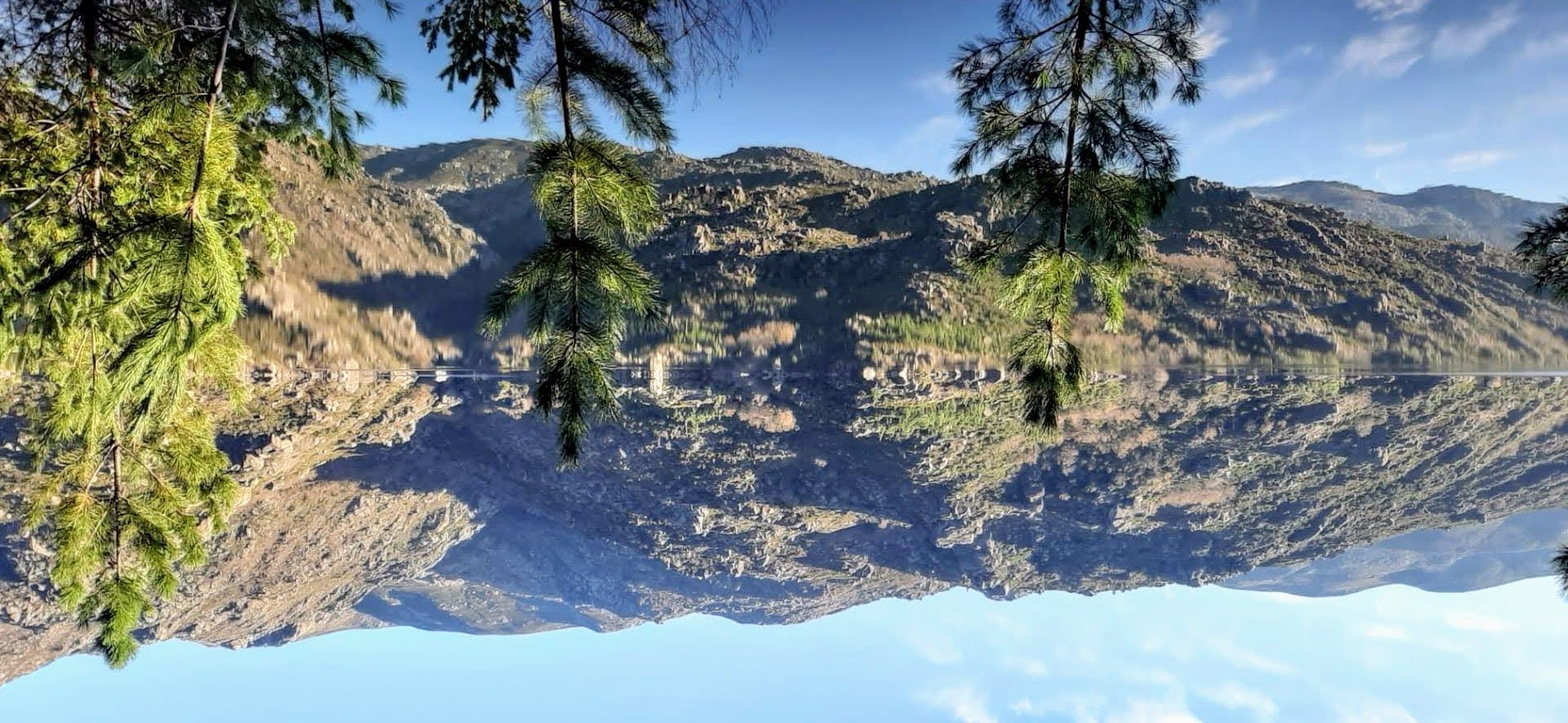
Peneda-Gerês, created in 1971, is Portugal’s only national park. Unlike many national parks elsewhere, it is not an empty wilderness. Villages, terraced fields, common grazing land (baldios) and centuries-old paths are woven through its mountains, across five municipalities: Arcos de Valdevez, Melgaço, Montalegre, Ponte da Barca and Terras de Bouro.
That is the tension any rulebook for the park has to solve. Protect too little, and the oak woods, wolves and rivers suffer. Protect in the wrong way, and the people who have shaped this landscape leave. Announcing the new rules, Portugal’s Minister for Environment and Energy, Maria da Graça Carvalho, called the park “an extraordinary natural heritage that we have a responsibility to protect” (translated from Portuguese). She added that protecting it should not mean pushing people out, letting villages decline or ending essential services.
From a plan to a programme
Until now, the park has been governed by its Land-Use Plan (Plano de Ordenamento do PNPG), approved in February 2011. It divides the park into zones with different levels of protection, from total protection to complementary protection, and sets out which activities are allowed, need permission or are banned in each.
A 2014 national planning law (Lei n.º 31/2014) requires plans like this to be replaced by “special programmes”. The change is more than a new name. According to reporting by Observador, special programmes bind public authorities rather than private individuals directly; their rules are then carried into each municipality’s master plan. Work on Peneda-Gerês’s programme began in March 2017. A draft went to public discussion from 4 September to 15 October 2024, and in August 2025 ICNF said it was being finalised. The Government has now approved it, more than nine years after the process started.
What the new rules change
The Government’s announcement sets out the main changes:
- New boundaries. The park’s geographic limits are updated. No maps or figures have been published yet. [CONFIRM area and changes once the text is out]
- Paths kept open. Simpler procedures to conserve and maintain existing paths, used for getting around, farming, forestry and civil protection.
- Better fire prevention. Easier installation of surveillance, prevention and firefighting infrastructure, including water points for firefighting.
- Traditional livelihoods continue. Farming, livestock grazing, silvopastoral activities and forestry are explicitly safeguarded.
- Villages that work. Easier maintenance and modernisation of water supply, sanitation, telecommunications, energy and community facilities, plus easier recovery of existing buildings.
- Nature tourism. The programme aims to promote nature tourism.
- Simpler procedures. Clearer rules for any work in the park, less red tape, and closer coordination between ICNF, the municipalities and other bodies.
The announcement also mentions renewable energy installations for self-consumption, without further detail. [CONFIRM scope]
Motorhomes: service areas only at campsites
The most direct change for visitors concerns motorhomes. Under the new programme, motorhome service areas outside campsites and caravan parks are banned inside the park. The Government says it will work with the municipalities on organised places to welcome motorhomes.
This builds on national rules already in force. Since 2021, Portugal’s Highway Code (Law 66/2021) has banned motorhome parking and overnight stays in protected areas and Natura 2000 sites, except in places expressly authorised. Fines in protected areas range from €120 to €600.
Who looks after the park
The new rules call for closer coordination between ICNF and local authorities. That already has a home: since March 2021, Peneda-Gerês has had a co-management commission, chaired by Arcos de Valdevez municipality and bringing together ICNF, the University of Minho, the regional agriculture directorate, the park’s baldios and the local development association ADERE-Peneda Gerês.
What this means for your visit
The new programme’s full text has not been published yet, so its detailed rules are not known. The rules below come from the park’s 2011 Land-Use Plan and from national law. Check with ICNF which rules apply on the date of your visit [CHECK WITH ICNF]:
- No camping or caravanning outside designated sites. Use the park’s campsites and authorised areas.
- No motorhome parking or overnight stays outside places expressly authorised, under national law.
- No parking along the forest road from Leonte to Portela do Homem, nor along the forest road on the left bank of the Homem river and the Vilarinho da Furna reservoir, except for authorised vehicles.
- No driving on closed forest roads, and follow the conditions on restricted ones.
- Some activities need permission or are banned depending on the protection zone. Check with ICNF before planning canyoning, cycling tours or boating. [CHECK WITH ICNF]
Visit with respect
- Remember you are in someone’s home. Paths you walk on are also how farmers reach their fields and herds. Close gates, give way to livestock and park only where it is allowed.
- Spend locally. The new rules aim to keep villages alive. Eating, sleeping and buying in them does the same.
- Travelling by motorhome? Plan ahead. Book a campsite or an authorised area before you arrive, and use only approved points to empty waste water.
- No fire, ever. Check the wildfire risk with IPMA, Portugal’s weather institute before you go.
In an emergency, call 112, the European emergency number.
Sources
- Government of Portugal — New rules for Peneda-Gerês National Park reconcile nature conservation and community development (2 Nov 2026, in Portuguese)
- ICNF — Land-Use Plan of Peneda-Gerês National Park: activities by protection zone (in Portuguese)
- Observador — Three of four protected-area programmes still to be concluded (5 Aug 2025, in Portuguese)
- Diário da República — Law 31/2014, framework law on land, spatial planning and urbanism (in Portuguese)
- Postal do Algarve — Motorhome parking law comes into force (2021, in Portuguese)
- Agroportal — Public consultation on the Peneda-Gerês co-management plan (in Portuguese)
- ICNF — Institute for Nature Conservation and Forests
National parks are often imagined as places without people. Peneda-Gerês has never been one. Its new rules are a bet that the best way to protect these mountains is to keep the communities that have looked after them for centuries.